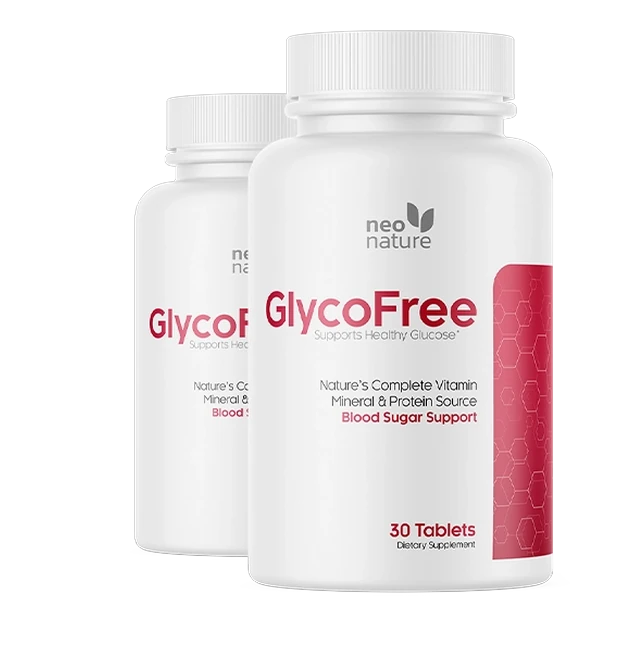
Around $49-$69 per bottle depending on the package (per vendor), with bundle discounts
90-day money-back guarantee (per vendor; reported 365-day on the 6-bottle pack).
GlycoFree Review 2026: Blood Sugar Support, Formula & Safety
GlycoFree is a blood-sugar support capsule built on berberine, bitter melon, cinnamon, inulin, gymnema, banaba leaf, alpha-lipoic acid and chromium. Berberine is the ingredient with the strongest evidence; the others are weak-to-modest, the doses are undisclosed, and it is not a substitute for diabetes medication.
GlycoFree is a sensibly assembled blood-sugar blend led by berberine, the ingredient with genuinely the best evidence in this category, with gymnema and inulin fibre as reasonable supporting players. The honest caveats: cinnamon and chromium add little reliable benefit, the per-ingredient doses are undisclosed, and the finished blend is untested. The key safety point is hypoglycaemia — combined with diabetes medication, berberine can push blood sugar too low — so add it only under medical supervision, and never as a replacement for treatment.
The short version
- What it is built on: Alpha Lipoic Acid, Berberine, Chromium — the ingredients here with actual human research behind them.
- What it can realistically do: steadier post-meal glucose and fewer energy dips. The plausible outcome for blood-sugar support is steadier post-meal glucose and fewer energy dips, built over weeks.
- What you are risking: the price of one bottle, bounded by a 90-day refund window. Read the conditions attached to it rather than the badge.
- How you will know: fasting glucose readings and HbA1c. Set a review date eight weeks out and decide honestly.
Should you buy GlycoFree?
Consider it if: GlycoFree is most reasonable for an informed adult comparing options for healthy blood-sugar and metabolic support rather than searching for a guaranteed fix.
Hold off if: diabetes medicines, insulin, a history of low blood sugar, pregnancy or nursing, liver or kidney conditions and upcoming surgery — each of those warrants a conversation with your GP, diabetes nurse or endocrinologist first.
Around $49-$69 per bottle depending on the package (per vendor), with bundle discounts
90-day money-back guarantee (per vendor; reported 365-day on the 6-bottle pack).
- Answer-first review: what to know before you buy
- Ingredients, dosage clarity, safety and refund terms checked
- No fake ratings, no invented testimonials and no medical promises
Affiliate link — FactoWiki may earn a commission at no extra cost to you. See our disclosure.
This is a desk-based buying guide, not a hands-on product test or a clinical review. No named medical reviewer is credited. Read our editorial policy.
What is GlycoFree?
What this is: GlycoFree is sold as a blood sugar & metabolism product. Judge it by the formula actually listed, the amount per serving, safety warnings, full checkout cost and refund rules—not by the strongest advertising sentence.
GlycoFree is marketed as a natural blood-sugar and metabolic-support supplement. Its commonly listed formula combines berberine, bitter melon, cinnamon, inulin (a prebiotic fibre), gymnema, banaba leaf, alpha-lipoic acid and chromium. It is taken as a daily capsule and sold directly online with a 90-day guarantee (reported 365-day on the largest bundle); per-ingredient doses are not disclosed.
Blood-sugar supplements usually blend berberine, cinnamon, chromium and similar ingredients marketed to support glucose metabolism. The honest picture is uneven: berberine has the strongest evidence, most others are weak-to-modest, and none replaces prescribed treatment. Anyone on glucose-lowering medication should only add one under medical supervision, because of the risk of blood sugar dropping too low.
How we reviewed this guide
- Assessed the formula ingredient by ingredient against what has been trialled in people — and for blood-sugar support the honest ceiling is steadier post-meal glucose and fewer energy dips
- Checked label, form and safety considerations, including interactions
- Reviewed pricing, packages and the refund/guarantee terms
- Compared it against honest alternatives for the same goal
No star average is published for GlycoFree, because we have no verified purchase dataset to build one from. The panel, the evidence and the terms are what this page reports. Without amounts, nothing on the panel can be checked against the literature on blood-sugar support.
Is GlycoFree worth considering?
Practical read: It is reasonable to compare GlycoFree when the label is transparent, the price is acceptable and you are not relying on it to replace balanced meals, fibre, activity, sleep, weight management and clinician-guided monitoring when blood glucose is abnormal.
| Product | GlycoFree |
|---|---|
| Category | Blood Sugar & Metabolism |
| Main focus | Support for healthy blood sugar metabolism |
| Formula check | Review dosage transparency for the featured ingredients |
| Best for | Readers comparing ingredients, side effects, price, seller terms and alternatives before buying |
| Avoid if | people using insulin, metformin, sulfonylureas or other glucose-lowering medication unless a clinician approves it |
How does GlycoFree work?
How to read the claim: GlycoFree groups several ingredients around healthy blood-sugar and metabolic support. The mechanism may sound plausible, but plausibility, clinical proof and a meaningful real-world result are three different things.
GlycoFree targets several glucose pathways: berberine activates AMPK to improve insulin sensitivity; gymnema and banaba are proposed to support glucose handling and curb sweet cravings; bitter melon and cinnamon target sugar absorption; inulin fibre supports the gut and blunts post-meal spikes; and alpha-lipoic acid and chromium are antioxidant and cofactor support. Berberine does most of the evidence-based work.
Why does healthy blood sugar support matter?
This area matters because symptoms can overlap with treatable medical issues. A supplement may add nutritional support, but it cannot identify the cause or replace balanced meals, fibre, activity, sleep, weight management and clinician-guided monitoring when blood glucose is abnormal.
The workable order is basics first, red flags second, formula third. That keeps expectations grounded and makes any real effect easier to spot.
What ingredients are in GlycoFree?
Practical read: Start with the Supplement Facts panel and look for the amount of each active ingredient, not just a long list of names. The ingredients most visible on this page include Berberine, Bitter Melon, Cinnamon, Inulin.
| Ingredient | What it does in the formula |
|---|---|
| Berberine | the ingredient with the strongest blood-sugar evidence; activates AMPK |
| Bitter Melon | traditional glucose herb with limited human evidence |
| Cinnamon | popular but inconsistent — small, mixed effects in trials |
| Inulin | prebiotic fibre that supports the gut and may blunt post-meal spikes |
| Gymnema Sylvestre | herb studied for blood sugar and reducing sweet cravings |
| Banaba Leaf | source of corosolic acid, studied for glucose with modest evidence |
| Alpha Lipoic Acid | antioxidant studied for glucose and nerve health |
| Chromium | trace mineral with weak evidence outside genuine deficiency |
Ingredient spotlight
Below is a closer look at the main ingredients highlighted for GlycoFree, beginning with Berberine. The linked guides discuss the ingredient evidence separately from the finished-product claims.
Berberine
The ingredient with the strongest blood-sugar evidence; activates AMPK. Read the Berberine guide →
Bitter Melon
Traditional glucose herb with limited human evidence.
Cinnamon
Popular but inconsistent — small, mixed effects in trials. Read the Cinnamon guide →
Inulin
Prebiotic fibre that supports the gut and may blunt post-meal spikes.
Gymnema Sylvestre
Herb studied for blood sugar and reducing sweet cravings. Read the Gymnema Sylvestre guide →
Banaba Leaf
Source of corosolic acid, studied for glucose with modest evidence.
Alpha Lipoic Acid
Antioxidant studied for glucose and nerve health. Read the Alpha Lipoic Acid guide →
Chromium
Trace mineral with weak evidence outside genuine deficiency. Read the Chromium guide →
What benefits can GlycoFree realistically offer?
Realistic answer: GlycoFree may offer incremental support for healthy blood-sugar and metabolic support, but the size of any benefit is uncertain. Avoid turning a possible effect into a promise.
The vendor markets GlycoFree as supporting healthy blood sugar, insulin sensitivity, reduced cravings and steady energy.
What does the evidence say about GlycoFree?
Evidence check: an ingredient with promising early data can still be useless at the dose in this capsule. Both facts can be true simultaneously.
Berberine has the strongest evidence — meaningful reductions in fasting glucose and HbA1c in trials. Gymnema, banaba and alpha-lipoic acid have modest support; inulin helps the gut and fullness; cinnamon and chromium are weak and inconsistent. The finished blend is untested and the doses are undisclosed.
What is not proven about GlycoFree?
Not established: What GlycoFree has not demonstrated is the part buyers care about most: a predictable result, in a predictable time, for a predictable person. Research on individual components is not research on this product.
It is not established that GlycoFree treats or reverses diabetes or replaces prescribed medication; it is blood-sugar support, not a treatment.
| Review area | Assessment | What it means |
|---|---|---|
| Ingredient evidence | Qualitative review | The evidence discussed below concerns the named ingredients. It does not by itself verify this exact finished product. |
| Label transparency | Check the current panel | Use the formula and dose limitations in this review, then compare them with the bottle offered by the seller. |
| Safety | Individual assessment needed | Read the product-specific cautions below. The presence of warnings is not a numerical measure of safety. |
| Price/value | Not numerically rated | Compare the delivered cost, serving count, alternatives and current refund conditions before buying. |
Is GlycoFree legit or a scam?
Balanced verdict: a slick funnel does not make GlycoFree fraudulent, and a professional-looking page does not make it trustworthy. What decides it is verifiable company details, a readable panel, a secure checkout and claims that stop short of claims about reversing type 2 diabetes or replacing medication.
Where pressure substitutes for detail, treat that as the answer. A legitimate offer can afford to let you read.
What do GlycoFree reviews and complaints usually mention?
Reading the reviews: the useful GlycoFree reviews state a starting point, a dose and a duration. The rest describe shipping and mood, which are not evidence about the formula.
Look for repeated, specific patterns rather than the extremes. If several detailed accounts describe the same billing or delivery problem, that is a signal. A handful of glowing or furious one-liners is not.
- What it costs: GlycoFree tiers are structured to push volume. The per-bottle saving is genuine; so is the six-month commitment it requires. Weigh that total against what blood-sugar support realistically delivers: steadier post-meal glucose and fewer energy dips.
- Realistic result: steadier post-meal glucose and fewer energy dips, on top of meal composition, carbohydrate load, activity after eating, weight and sleep. GlycoFree is not a medicine and does not act like one.
- What is actually in it: the GlycoFree sales page should show a full panel. If it only shows an ingredient carousel, the doses are the missing information. A blend total tells you the sum, never the split.
- Seller clarity: the practical difficulty with GlycoFree refunds is usually knowing where to send the bottles and whether anyone will respond. A guarantee you cannot practically use is a marketing line, not a protection.
- Safety fit: speak to your GP, diabetes nurse or endocrinologist before taking GlycoFree if you are pregnant, nursing, or on regular medication — hypoglycaemia if it is stacked on top of metformin, sulfonylureas or insulin being the relevant issue.
Where should you buy GlycoFree safely?
Safer buying route: stick to the official GlycoFree offer page. Check the final order summary line by line — package, quantity, shipping, tax — before confirming.
If the page will not let you review the order total, or the refund terms are hard to find, leave the checkout. Both are deliberate design choices.
Two minutes before you buy: verify the GlycoFree quantity, the delivered total and the return address. Both matter more than the headline price.
See the current GlycoFree price and what’s includedAffiliate notice: FactoWiki may earn a commission from a qualifying GlycoFree purchase at no additional cost to you.
What are the pros and cons of GlycoFree?
Pros
- Built around berberine, the best-evidenced blood-sugar ingredient
- Includes prebiotic fibre (inulin) and gymnema for cravings and fullness
- Long money-back guarantee (per vendor)
Cons
- Cinnamon and chromium add little reliable benefit
- Doses undisclosed in a proprietary blend
- Berberine interacts with many medications and can upset digestion
- Not a substitute for diabetes medication, diet or activity
Is GlycoFree safe, and what side effects should you know?
Safety answer: GlycoFree may be tolerated by some adults, but “natural” does not mean risk-free. Safety depends on the exact dose, allergies, health conditions and possible interactions, especially where diabetes medicines, insulin, a history of low blood sugar, pregnancy or nursing, liver or kidney conditions and upcoming surgery.
The main practical risk is hypoglycaemia: berberine genuinely lowers blood sugar, so combining GlycoFree with diabetes medication or insulin can push glucose too low and needs medical supervision. Berberine also interacts with many drugs (it affects drug-metabolising enzymes) and commonly causes digestive upset; alpha-lipoic acid can add to blood-sugar lowering. Pregnant or nursing women should avoid berberine. Doses are undisclosed, which makes interactions harder to judge.
Who should use GlycoFree?
Who it suits: someone who has already dealt with meal composition, carbohydrate load, activity after eating, weight and sleep and wants to test whether an addition helps, with a way to check the result.
May consider: Adults wanting modest, evidence-informed blood-sugar support alongside diet and activity, who are not on glucose-lowering medication (or who have cleared it with a doctor).
Should avoid or check with a doctor first: Anyone on diabetes medication without supervision, pregnant or nursing women (berberine), and anyone using it to replace prescribed treatment or delay seeing a doctor about high blood sugar.
Who should avoid GlycoFree?
Use extra caution: Avoid GlycoFree, or get individual medical advice first, when the following are relevant: diabetes medicines, insulin, a history of low blood sugar, pregnancy or nursing, liver or kidney conditions and upcoming surgery. Children should not use an adult supplement, and pet products should be given only with veterinary guidance.
Stop GlycoFree and seek care if symptoms are severe, sudden, progressive, or accompanied by anything that worries you. your GP, diabetes nurse or endocrinologist is the right first call.
How does GlycoFree compare with regular blood-sugar support products?
When choosing between similar options, weight disclosure and modesty over ingredient count and promises.
The practical point is simple: Remember that GlycoFree and a competitor can advertise similar ingredients while providing very different amounts. Compare the Supplement Facts panels, especially the entries for Berberine, Bitter Melon, Cinnamon, Inulin, rather than relying on front-label wording.
What are the best alternatives to GlycoFree?
- Diet, weight management and activity — the proven foundation of blood-sugar control
- Single, dose-transparent berberine, the ingredient doing most of the work here
- A doctor's review of HbA1c and medication if blood sugar is a real concern
How should you use GlycoFree for the best results?
How to trial it: pharmacist check, labelled dose, stable routine, eight weeks, then an honest look at fasting glucose readings and HbA1c.
Daily capsules — see the label for the exact serving size. As with most supplements of this type, consistency matters more than timing — effects tend to build gradually with daily use rather than appearing overnight. Pairing it with the basics that have the strongest evidence for blood sugar & metabolism — good sleep, regular movement, a balanced diet and managing stress — will usually do more than any product alone. Give it a fair trial period, and stop if you notice any reaction.
What mistakes should you avoid before buying GlycoFree?
The shortcut to avoid: letting a countdown decide it. Check the formula, the amounts, the seller and the full order cost — the timer will still be there, and usually resets anyway.
- The panel: compare the GlycoFree doses against the amounts used in published research. A gap of an order of magnitude is common and decisive. Ingredient names are marketing; the dose column is the product.
- The guarantee: read the GlycoFree return conditions rather than the badge. Who pays shipping and whether empties count are the practical questions. Weigh that total against what blood-sugar support realistically delivers: steadier post-meal glucose and fewer energy dips.
- Medication check: hypoglycaemia if it is stacked on top of metformin, sulfonylureas or insulin is the interaction worth raising with a pharmacist before starting GlycoFree.
- The seller: buy GlycoFree from the official source so you get in-date stock and an actual return path. A discount that costs you the ability to return it is not a discount.
Does GlycoFree clearly show ingredient dosages?
One limitation worth naming: GlycoFree lists its ingredients without fully disclosing how much of each is present, which is what you would need to judge it against the research. Human trials at disclosed doses are the standard worth applying.
How much does GlycoFree cost?
Do the arithmetic: convert every tier into a monthly cost. The relative value of the packages changes once you do.
Around $49-$69 per bottle depending on the package (per vendor), with bundle discounts. 90-day money-back guarantee (per vendor; reported 365-day on the 6-bottle pack). Sellers usually discount the bigger multi-bottle bundles to a lower per-bottle price. Exact current pricing changes often and should be confirmed on the official page before ordering.
| Package | Typical supply | What to expect |
|---|---|---|
| 1 bottle | About 1 month | Highest per-bottle price — good for trying it |
| 3 bottles | About 3 months | Mid-tier per-bottle price; often the popular bundle |
| 6 bottles | About 6 months | Lowest per-bottle price — best value if it works for you |
The cost of GlycoFree is a moving target. Read the final order summary — package price, shipping, tax and any add-on — rather than relying on a figure quoted in a review. The smallest package is the cheaper way to find out whether it suits you.
Before you buy: verify these yourself
- Stick to the official source — that is what preserves your ability to send it back. The return path is what you lose by buying outside the official channel.
- Confirm the live price and bonus terms; promotional tiers change without notice — and judge it against what blood-sugar support can realistically deliver: steadier post-meal glucose and fewer energy dips
- Re-read the refund window and how returns work before ordering
- Check the GlycoFree ingredients against your prescriptions; ask about hypoglycaemia if it is stacked on top of metformin, sulfonylureas or insulin specifically.
What is the GlycoFree refund policy?
Refund terms: save a copy of the GlycoFree policy at the point of purchase. Terms are edited, and a screenshot is the only version you will be able to point to later.
Start a GlycoFree return with time to spare rather than on the final day — transit to the return centre may not count toward the deadline.
What sources did we use?
What follows covers the GlycoFree formula as currently disclosed, the relevant interactions — hypoglycaemia if it is stacked on top of metformin, sulfonylureas or insulin in particular — and the groups who should get advice first.
- Berberine — evidence & safety
- Cinnamon — evidence & safety
- Gymnema Sylvestre — evidence & safety
- Alpha Lipoic Acid — evidence & safety
- Chromium — evidence & safety
- NIH Office of Dietary Supplements
- NIH National Center for Complementary and Integrative Health
- U.S. FDA — Dietary Supplements
Is GlycoFree worth it?
Where that leaves it: worth a look if the label checks out and the price is one you could write off. Otherwise, leave it.
GlycoFree is a sensibly assembled blood-sugar blend led by berberine, the ingredient with genuinely the best evidence in this category, with gymnema and inulin fibre as reasonable supporting players. The honest caveats: cinnamon and chromium add little reliable benefit, the per-ingredient doses are undisclosed, and the finished blend is untested. The key safety point is hypoglycaemia — combined with diabetes medication, berberine can push blood sugar too low — so add it only under medical supervision, and never as a replacement for treatment.
See the current GlycoFree price and what’s included
Affiliate link — FactoWiki may earn a commission at no extra cost to you. See our disclosure.
What do people ask about GlycoFree?
The useful framing: These questions focus on the decisions that matter most before buying GlycoFree: formula clarity, realistic results, safety, seller reliability and the role of Berberine, Bitter Melon, Cinnamon.
Is GlycoFree actually worth trying?
It depends on one thing: whether the GlycoFree panel shows doses. With them, you can judge it. Without them, the answer is no. Where the panel is hidden, the reason is usually arithmetic.
How long does GlycoFree take to show results?
Do not expect GlycoFree to announce itself. Changes at this level are gradual and easily confused with sleep, stress or season — which is why a stable routine and fasting glucose readings and HbA1c matter.
Can GlycoFree replace diabetes medicine?
No. GlycoFree must not replace prescribed diabetes medication. Stopping or reducing metformin, a sulfonylurea or insulin without medical supervision risks dangerously high blood glucose and, in type 1 diabetes, ketoacidosis. Any change to diabetes treatment is a decision for your GP, diabetes nurse or endocrinologist — not a supplement label.
What should I check before buying GlycoFree?
Read the Supplement Facts panel, verify the serving size and amounts, check warnings, calculate the full checkout cost and save the refund terms. For GlycoFree, pay particular attention to Berberine, Bitter Melon, Cinnamon.
Can GlycoFree cause side effects?
Yes. Every active ingredient can cause effects you did not want. For GlycoFree, the flagged interaction is hypoglycaemia if it is stacked on top of metformin, sulfonylureas or insulin.
Can I take GlycoFree with medication?
Not until a pharmacist has seen the label. Supplement–drug interactions are common and under-reported. With GlycoFree, ask specifically about hypoglycaemia if it is stacked on top of metformin, sulfonylureas or insulin.
Where is the safest place to buy GlycoFree?
Use the verified GlycoFree seller linked from this guide, then inspect the domain, final price, shipping, contact details and refund language before paying. For a blood sugar & metabolism product, avoid listings where authenticity, storage conditions or guarantee coverage cannot be confirmed.
Is GlycoFree FDA approved?
No. Supplements including GlycoFree reach the market without approval. Manufacturing claims and efficacy claims are entirely separate. Presentation is the cheapest thing on the page to fake.
What are common complaints about GlycoFree?
Read the panel, total the delivered cost, set a realistic expectation and confirm the return process. That covers what buyers usually raise later.
More Product Guides
 Blood Sugar & Metabolism
GlPro
GLPro (GlPro) is a blood-sugar support capsule marketed as a 'natural GLP-1 booster', built arou…
 Hearing & Tinnitus Support
RingZen6
RingZen6 is a liquid hearing-and-tinnitus supplement with 20+ ingredients including ginkgo, zinc…
 Hearing & Tinnitus Support
NeuroQuiet
NeuroQuiet is a liquid hearing-and-cognition supplement built on alpha-GPC, GABA, L-dopa bean (m…