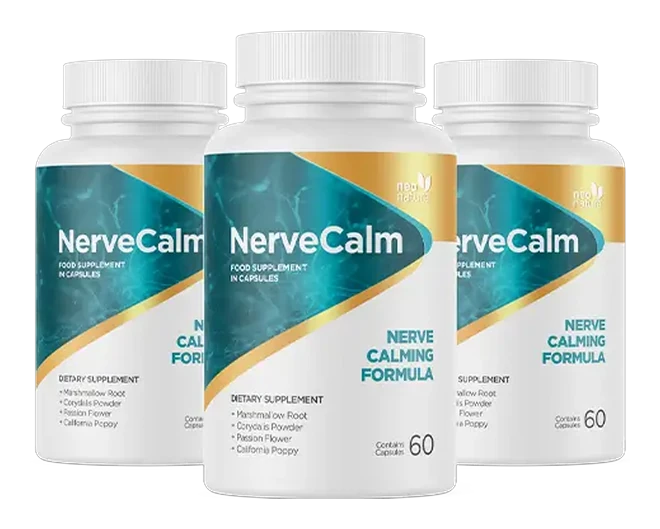
Around $49-$69 per bottle depending on the package (per vendor), with bundle discounts
180-day money-back guarantee (per vendor).
NerveCalm Review 2026: Nerve Comfort, Formula & Safety
NerveCalm is a nerve-support supplement marketed for tingling, burning and numbness, built on calming botanicals (corydalis, California poppy, marshmallow root) plus nerve-nutrient staples like alpha-lipoic acid and acetyl-L-carnitine. Of these, ALA has the best nerve evidence; most of the botanicals are traditional or weakly studied, the doses are undisclosed, and it is broad wellness support, not a treatment for neuropathy.
NerveCalm is a reasonable, gentle nerve-support blend whose strongest ingredient — alpha-lipoic acid — does have real evidence in diabetic nerve discomfort. But the honest read is cautious: the calming botanicals (corydalis, California poppy, marshmallow root) are traditional or weakly studied, the exact doses sit behind a proprietary blend, and the brand name appears across several different formulas, so check the label of the exact product you receive. Most importantly, persistent nerve symptoms usually have an underlying cause — frequently diabetes — that needs a doctor, and this is support, not a treatment.
The short version
- What it is built on: Alpha Lipoic Acid, Coenzyme Q10, Magnesium — the ingredients here with actual human research behind them.
- What it can realistically do: real but partial relief where a specific deficiency is being corrected.
- What you are risking: the price of one bottle, bounded by a 180-day refund window. Read the conditions attached to it rather than the badge.
- How you will know: tingling, burning and numbness scored consistently over 8–12 weeks. Set a review date eight weeks out and decide honestly.
Should you buy NerveCalm?
Consider it if: NerveCalm may suit you when you are looking for nerve comfort and healthy nerve-function support, have realistic expectations and are willing to verify the live label, total price and return terms.
Skip it if: take advice from your GP or a neurologist first where any of these apply: take advice from your GP or a neurologist first where any of these apply: new weakness, rapidly worsening numbness, balance problems, diabetes medicines, chemotherapy, kidney disease and unexplained nerve symptoms.
Around $49-$69 per bottle depending on the package (per vendor), with bundle discounts
180-day money-back guarantee (per vendor).
- Answer-first review: what to know before you buy
- Ingredients, dosage clarity, safety and refund terms checked
- No fake ratings, no invented testimonials and no medical promises
Affiliate link — FactoWiki may earn a commission at no extra cost to you. See our disclosure.
This is a desk-based buying guide, not a hands-on product test or a clinical review. No named medical reviewer is credited. Read our editorial policy.
What is NerveCalm?
Practical read: NerveCalm is sold as a nerve health product. Judge it by the formula actually listed, the amount per serving, safety warnings, full checkout cost and refund rules—not by the strongest advertising sentence.
NerveCalm is marketed as a natural nerve-support supplement for people experiencing tingling, burning, numbness or ongoing nerve discomfort. Its commonly listed formula centres on calming botanicals such as Corydalis Yanhusuo, California Poppy Seed and Marshmallow Root (Althaea), alongside nerve-nutrient staples like alpha-lipoic acid and acetyl-L-carnitine, with some versions adding magnesium, turmeric or CoQ10. Worth noting plainly: several different products are sold under the 'NerveCalm' name with different ingredient lists, so the formula actually shown on the label and doses are vendor-stated and should be confirmed on the label you receive.
Nerve-support supplements typically combine antioxidants (such as alpha-lipoic acid), B vitamins and amino acids or botanicals marketed to ease tingling, burning and numbness. Honesty matters here: peripheral nerve symptoms often have an underlying cause — most commonly diabetes — that needs medical assessment, and most botanical nerve ingredients have weak or traditional-only evidence. These are broad wellness support, not treatments for neuropathy.
How we reviewed this guide
- Read the ingredient list against the published literature, including where it runs out — and for nerve comfort support the honest ceiling is real but partial relief where a specific deficiency is being corrected
- Checked label, form and safety considerations, including interactions
- Reviewed pricing, packages and the refund/guarantee terms
- Compared it against honest alternatives for the same goal
There are no invented review counts here. What follows is the label, what the research says about those ingredients, and what the seller commits to in writing. Ingredient names are marketing; the dose column is the product.
Is NerveCalm worth considering?
What this is: Possibly, but only for a buyer seeking nerve comfort and healthy nerve-function support who accepts that the likely benefit is slow, uncertain support rather than nerve repair or a cure for neuropathy.
| Product | NerveCalm |
|---|---|
| Category | Nerve Health |
| Main focus | Support for nerve comfort and support |
| Formula check | Review dosage transparency for the featured ingredients |
| Best for | Readers comparing ingredients, side effects, price, seller terms and alternatives before buying |
| Avoid if | people with sudden weakness, worsening numbness, diabetic nerve symptoms, foot wounds or spreading pain without clinician oversight |
How does NerveCalm work?
How to read the claim: NerveCalm groups several ingredients around nerve comfort and healthy nerve-function support. The mechanism may sound plausible, but plausibility, clinical proof and a meaningful real-world result are three different things.
The formula works on two ideas. The calming botanicals (corydalis, California poppy) are traditional sedative and pain herbs proposed to quiet overactive nerve signalling, while the nutrient ingredients (alpha-lipoic acid, acetyl-L-carnitine) target the oxidative stress and energy metabolism involved in nerve health. The reality check: only alpha-lipoic acid has solid human evidence in nerve discomfort (mainly diabetic), the botanicals are weakly studied, and because the doses are undisclosed, the effect is hard to predict.
Why does nerve comfort and healthy nerve function matter?
Strip away the sales language and the question becomes straightforward: People often shop for nerve comfort and healthy nerve-function support when they want a simple answer to a complicated problem. In reality, progress usually depends on finding the cause of symptoms, blood-sugar control when relevant, correcting confirmed deficiencies, movement and clinician-guided treatment, with supplements playing a secondary role when the formula is appropriate.
Keep NerveCalm in proportion — an optional extra on top of the underlying cause — diabetes, B12 deficiency, chemotherapy, alcohol or compression. Anything persistent or worsening belongs with your GP or a neurologist.
What ingredients are in NerveCalm?
Plainly: Start with the Supplement Facts panel and look for the amount of each active ingredient, not just a long list of names. The ingredients most visible on this page include Corydalis Yanhusuo, California Poppy Seed, Marshmallow Root (Althaea), Passionflower.
| Ingredient | What it does in the formula |
|---|---|
| Corydalis Yanhusuo | traditional pain-relieving botanical with limited human evidence |
| California Poppy Seed | traditional calming herb used for sleep and discomfort, weak human data |
| Marshmallow Root (Althaea) | soothing demulcent botanical with little nerve-specific evidence |
| Passionflower | calming herb traditionally used for anxiety and sleep |
| Alpha Lipoic Acid | antioxidant with the best human evidence here — studied for diabetic nerve discomfort |
| Acetyl-L-Carnitine | amino-acid derivative studied for nerve comfort, with mixed evidence |
Ingredient spotlight
Below is a closer look at the main ingredients highlighted for NerveCalm, beginning with Corydalis Yanhusuo. The linked guides discuss the ingredient evidence separately from the finished-product claims.
Corydalis Yanhusuo
Traditional pain-relieving botanical with limited human evidence.
California Poppy Seed
Traditional calming herb used for sleep and discomfort, weak human data.
Marshmallow Root (Althaea)
Soothing demulcent botanical with little nerve-specific evidence.
Passionflower
Calming herb traditionally used for anxiety and sleep. Read the Passionflower guide →
Alpha Lipoic Acid
Antioxidant with the best human evidence here — studied for diabetic nerve discomfort. Read the Alpha Lipoic Acid guide →
Acetyl-L-Carnitine
Amino-acid derivative studied for nerve comfort, with mixed evidence. Read the Acetyl-L-Carnitine guide →
What benefits can NerveCalm realistically offer?
Realistic answer: The reasonable benefits are supportive rather than curative. A fair expectation is slow, uncertain support rather than nerve repair or a cure for neuropathy, provided the formula is suitable and used consistently.
The vendor markets NerveCalm as targeting the 'root causes' of nerve discomfort — inflammation and damaged nerve fibres — to soothe tingling and burning and support nerve regeneration.
What does the evidence say about NerveCalm?
Reading the science: work through it in layers. Does the ingredient have human evidence? At what dose? Is that dose present here? Is the finished product itself tested? Most formulas fail at the third question.
Here is the part that matters: Alpha-lipoic acid is the standout: it has reasonable human evidence for easing diabetic nerve discomfort. Acetyl-L-carnitine has mixed supporting data. The calming botanicals (corydalis, California poppy, passionflower, marshmallow root) are mostly traditional with limited human trials. The finished blend has not been clinically tested and the doses are undisclosed.
What is not proven about NerveCalm?
Not established: the phrases that sound like evidence are the ones chosen to avoid making an evidential claim. Read them as such.
It is not established that NerveCalm regenerates nerves, reverses neuropathy, or treats any nerve condition; claims of repairing nerve damage at the source go beyond the evidence.
| Review area | Assessment | What it means |
|---|---|---|
| Ingredient evidence | Qualitative review | The evidence discussed below concerns the named ingredients. It does not by itself verify this exact finished product. |
| Label transparency | Check the current panel | Use the formula and dose limitations in this review, then compare them with the bottle offered by the seller. |
| Safety | Individual assessment needed | Read the product-specific cautions below. The presence of warnings is not a numerical measure of safety. |
| Price/value | Not numerically rated | Compare the delivered cost, serving count, alternatives and current refund conditions before buying. |
Is NerveCalm legit or a scam?
Balanced verdict: the scam question about NerveCalm is answerable, but not from the sales page. Look for a real company address, an ingredient panel with numbers on it, and marketing that does not stray into claims of regenerating nerves or curing neuropathy.
NerveCalm being a functioning business tells you the order will be fulfilled. It does not tell you the product does anything, and those are routinely confused.
What do NerveCalm reviews and complaints usually mention?
Reading the reviews: ask of each NerveCalm review whether the writer could have distinguished the product from a placebo. Almost none could, which is where reviews sit in the hierarchy.
With NerveCalm, the useful stance is somewhere between cynicism and credulity. Testimonials can be genuine and still be unrepresentative. Let the ingredient panel and the refund terms carry the decision.
- What it costs: check the delivered NerveCalm total including shipping at each tier. The advertised per-bottle figure often excludes it. The smallest package is the cheaper way to find out whether it suits you.
- Realistic result: real but partial relief where a specific deficiency is being corrected, on top of the underlying cause — diabetes, B12 deficiency, chemotherapy, alcohol or compression. NerveCalm is not a medicine and does not act like one.
- What is actually in it: judge NerveCalm by whether you can reconstruct the panel from the page. If not, you are buying on trust. Ingredient names are marketing; the dose column is the product.
- Refund friction: buyers of products like NerveCalm most often complain about unclear return steps, missing support contacts and who pays postage. Save the terms as displayed on your order date — wording gets edited.
- Fit and safety: the situations that rule NerveCalm out are pregnancy and nursing without advice, an unmanaged diagnosed condition, and any expectation of certainty. high-dose B6, which can itself cause nerve damage above roughly 100 mg/day long-term is the interaction to check.
Where should you buy NerveCalm safely?
Where to buy: if you cannot identify who you are buying NerveCalm from and how to return it, that is the answer. Use the verified seller.
Read the NerveCalm order page for subscription wording and pre-ticked add-ons before you pay. A cheap headline price stops being cheap once shipping, a second product and a recurring charge are attached.
Before you order: confirm the NerveCalm package, the amount actually charged and the written return conditions on the final screen — then keep a copy of both. Bundle savings only count if you finish the bottles inside the guarantee.
See NerveCalm packages, shipping and refund termsAffiliate notice: FactoWiki may earn a commission from a qualifying NerveCalm purchase at no additional cost to you.
What are the pros and cons of NerveCalm?
Pros
- Includes alpha-lipoic acid, which has genuine nerve-discomfort evidence
- Stimulant-free, gentle calming-botanical profile
- Long 180-day money-back guarantee (per vendor)
Cons
- Most of the botanicals are traditional or weakly studied
- Multiple different formulas are sold under the 'NerveCalm' name — confirm the label
- Doses undisclosed in a proprietary blend
- Not a treatment — neuropathy needs the underlying cause assessed
Is NerveCalm safe, and what side effects should you know?
Safety answer: NerveCalm may be tolerated by some adults, but “natural” does not mean risk-free. Safety depends on the exact dose, allergies, health conditions and possible interactions, especially where new weakness, rapidly worsening numbness, balance problems, diabetes medicines, chemotherapy, kidney disease and unexplained nerve symptoms.
The ingredients are generally well tolerated, but a few cautions matter: corydalis and California poppy are sedative and can add to the effect of sleep, anxiety or pain medication; alpha-lipoic acid can lower blood sugar (relevant if you take diabetes medication); and because the doses are undisclosed, interactions are hard to predict. Anyone on medication, pregnant or nursing should speak with a qualified clinician first.
Who should use NerveCalm?
Right buyer: unhurried, realistic, already handling the underlying cause — diabetes, B12 deficiency, chemotherapy, alcohol or compression, and willing to run a proper eight-week trial.
May consider: Adults with mild, already-assessed nerve discomfort who want gentle support and have realistic expectations.
Should avoid or check with a doctor first: Anyone with new, worsening or one-sided nerve symptoms (which need medical assessment), people on sedatives or diabetes medication without checking first, and anyone expecting it to reverse neuropathy. Diabetic nerve pain in particular should be managed with a doctor.
Who should avoid NerveCalm?
Use extra caution: Avoid NerveCalm, or get individual medical advice first, when the following are relevant: new weakness, rapidly worsening numbness, balance problems, diabetes medicines, chemotherapy, kidney disease and unexplained nerve symptoms. Children should not use an adult supplement, and pet products should be given only with veterinary guidance.
Discontinue NerveCalm and get medical advice for severe, sudden or worsening symptoms — that is a job for your GP or a neurologist, not a supplement.
How does NerveCalm compare with regular nerve-support products?
Compare NerveCalm with other nerve-support formulas on the parts that affect real-world value: disclosed amounts, serving size, ingredient forms, safety warnings, evidence, bottle count and final delivered cost.
Also compare the product with doing nothing but improving finding the cause of symptoms, blood-sugar control when relevant, correcting confirmed deficiencies, movement and clinician-guided treatment. If the supplement cannot add a plausible, affordable benefit beyond those basics, it may not be the best use of your money.
What are the best alternatives to NerveCalm?
- A medical assessment of the cause of nerve symptoms — most importantly to check for diabetes or a B12 deficiency
- Single, dose-transparent alpha-lipoic acid or benfotiamine, which have the better nerve evidence
- Reviewing our alpha-lipoic acid and acetyl-L-carnitine guides to judge the formula yourself
How should you use NerveCalm for the best results?
Running a fair trial: check interactions first, follow the serving on the label, change nothing else, and judge it on tingling, burning and numbness scored consistently over 8–12 weeks at the eight-week mark.
Daily capsules — see the label for the exact serving size. As with most supplements of this type, consistency matters more than timing — effects tend to build gradually with daily use rather than appearing overnight. Pairing it with the basics that have the strongest evidence for nerve health — good sleep, regular movement, a balanced diet and managing stress — will usually do more than any product alone. Give it a fair trial period, and stop if you notice any reaction.
What mistakes should you avoid before buying NerveCalm?
The shortcut to avoid: using the discount percentage as a proxy for value. A large reduction on an underdosed formula is still money spent on nothing.
- Read the panel first: for NerveCalm, the ingredient list is marketing and the dose column is the product. If the column is missing, treat the claims as unsupported. Compare each figure against the doses used in the published research.
- The guarantee: confirm the NerveCalm refund window at checkout and whether return postage is yours to pay. Terms are edited without notice. Note the deadline somewhere you will see it before the window closes.
- Your medications: run the NerveCalm ingredient list past a pharmacist, particularly regarding high-dose B6, which can itself cause nerve damage above roughly 100 mg/day long-term.
- The seller: use the official NerveCalm channel. Third-party resellers rarely honour the manufacturer's refund terms. A discount that costs you the ability to return it is not a discount.
Does NerveCalm clearly show ingredient dosages?
NerveCalm discloses what is in it but not how much. That single omission makes it harder to say whether every ingredient reaches a studied amount. Without amounts, nothing on the panel can be checked against the literature on nerve comfort support.
How much does NerveCalm cost?
Do the arithmetic: cost per day is the only figure that compares across products. Work it out before the bundle discount does your thinking for you.
Around $49-$69 per bottle depending on the package (per vendor), with bundle discounts. 180-day money-back guarantee (per vendor). Sellers usually discount the bigger multi-bottle bundles to a lower per-bottle price. Exact current pricing changes often and should be confirmed on the official page before ordering.
| Package | Typical supply | What to expect |
|---|---|---|
| 1 bottle | About 1 month | Highest per-bottle price — good for trying it |
| 3 bottles | About 3 months | Mid-tier per-bottle price; often the popular bundle |
| 6 bottles | About 6 months | Lowest per-bottle price — best value if it works for you |
We list NerveCalm pricing for orientation only. Multi-bottle discounts and shipping terms are adjusted often, so treat the seller's live page as authoritative. Bundle savings only count if you finish the bottles inside the guarantee.
Before you buy: verify these yourself
- Purchase from the seller linked here so returns, support and the guarantee remain available — particularly worth doing where high-dose B6, which can itself cause nerve damage above roughly 100 mg/day long-term applies
- Read the order summary for shipping, tax and pre-ticked add-ons
- Re-read the refund window and how returns work before ordering
- If you take anything regularly, have the NerveCalm panel checked. The relevant interaction is high-dose B6, which can itself cause nerve damage above roughly 100 mg/day long-term.
What is the NerveCalm refund policy?
Refund terms: capture the NerveCalm return policy as displayed on your order date and set a reminder a week before it expires.
Vague NerveCalm policy wording is itself information. Ask support to confirm the specifics in writing; if they will not, that is your answer. Return postage at your own cost is normal here; factor it in.
What sources did we use?
Ingredient and safety notes for NerveCalm, covering what is on the current label, the interactions worth raising with a pharmacist, and who should approach it with caution. None of it substitutes for diagnosis of the underlying cause, glucose control, prescribed neuropathic pain treatment or professional advice.
- Passionflower — evidence & safety
- Alpha Lipoic Acid — evidence & safety
- Acetyl-L-Carnitine — evidence & safety
- NIH Office of Dietary Supplements
- NIH National Center for Complementary and Integrative Health
- U.S. FDA — Dietary Supplements
Is NerveCalm worth it?
Final answer: The final answer depends on formula transparency, price and fit. For most buyers, the realistic ceiling is slow, uncertain support rather than nerve repair or a cure for neuropathy.
NerveCalm is a reasonable, gentle nerve-support blend whose strongest ingredient — alpha-lipoic acid — does have real evidence in diabetic nerve discomfort. But the honest read is cautious: the calming botanicals (corydalis, California poppy, marshmallow root) are traditional or weakly studied, the exact doses sit behind a proprietary blend, and the brand name appears across several different formulas, so check the label of the exact product you receive. Most importantly, persistent nerve symptoms usually have an underlying cause — frequently diabetes — that needs a doctor, and this is support, not a treatment.
See NerveCalm packages, shipping and refund terms
Affiliate link — FactoWiki may earn a commission at no extra cost to you. See our disclosure.
What do people ask about NerveCalm?
The useful framing: These questions focus on the decisions that matter most before buying NerveCalm: formula clarity, realistic results, safety, seller reliability and the role of Corydalis Yanhusuo, California Poppy Seed, Marshmallow Root (Althaea).
Is NerveCalm actually worth trying?
Conditionally. NerveCalm is defensible as an addition to the underlying cause — diabetes, B12 deficiency, chemotherapy, alcohol or compression, at a price you would not mind wasting. It is indefensible as a replacement for diagnosis of the underlying cause, glucose control, prescribed neuropathic pain treatment or professional advice.
How long does NerveCalm take to show results?
There is no dependable timetable because response depends on the formula, dose, baseline health and consistency. Promises of an overnight change are a warning sign, especially in the nerve health category.
What should I check before buying NerveCalm?
Read the formula on the live page rather than an advert or an old screenshot — sellers reformulate without announcing it.
Can NerveCalm cause side effects?
Yes. Any supplement can cause side effects, and NerveCalm is no exception. The specific concern in this category is high-dose B6, which can itself cause nerve damage above roughly 100 mg/day long-term. Stop and speak to your GP or a neurologist if anything unexpected develops.
Can I take NerveCalm with medication?
Not on your own judgement. Ask your GP or a neurologist or a pharmacist about NerveCalm against your current prescriptions — high-dose B6, which can itself cause nerve damage above roughly 100 mg/day long-term in particular.
Where is the safest place to buy NerveCalm?
Use the verified NerveCalm seller linked from this guide, then inspect the domain, final price, shipping, contact details and refund language before paying. For a nerve health product, avoid listings where authenticity, storage conditions or guarantee coverage cannot be confirmed.
Is NerveCalm FDA approved?
No. Regulators check how supplements are made, not whether they help. Treat GMP and registration as hygiene signals only.
What are common complaints about NerveCalm?
The predictable NerveCalm grievances are price, patience and paperwork. Anticipating them is more useful than being surprised by them.
More Product Guides
 Nerve Health
Arialief
Arialief is a neuropathy-support capsule led by PEA (palmitoylethanolamide) and alpha-lipoic aci…
 Blood Sugar & Metabolism
GlPro
GLPro (GlPro) is a blood-sugar support capsule marketed as a 'natural GLP-1 booster', built arou…
 Men's Vitality & Testosterone
Nitric Boost Ultra
Nitric Boost Ultra is a men's-vitality powder built around nitric-oxide ingredients — L-citrulli…