SciatiEase Review 2026: Nerve Health, Formula & Side Effects
SciatiEase is a 120-capsule formula built on palmitoylethanolamide (PEA), R-alpha lipoic acid at 300 mg, acetyl-L-carnitine and a B-vitamin complex. Of the sciatica products we have reviewed, this is the one whose ingredient choices most closely track the actual neuropathic pain literature.
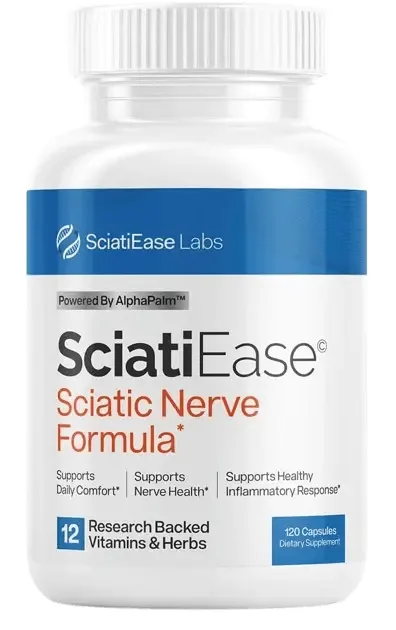
Credit where it is due: PEA, R-ALA and ALCAR are the three ingredients with the strongest human data for neuropathic pain, and this formula is built on all three rather than on a generic antioxidant roster. PEA in particular has several meta-analyses behind it. The unresolved question is dose — PEA trials use 600–1,200 mg daily of micronised material, ALCAR trials 1,500–3,000 mg, and a four-capsule serving cannot deliver study amounts of both plus everything else. The 300 mg ALA figure being published is a good sign; get the rest of the panel before ordering.
The short version
- What it is built on: we could not verify a complete, dose-disclosed ingredient panel, so this review makes no ingredient-level evidence claim for it.
- What it can realistically do: a modest reduction in burning and tingling where a nutrient deficiency is genuinely being corrected.
- What trying it costs: one bottle, inside whatever refund window the seller offers on your order date. Read who pays return postage and whether opened bottles qualify. Whether opened bottles qualify is the clause that decides if this is usable.
- How you will know: leg pain versus back pain on a 0–10 scale, walking distance before symptoms start, and how far the pain travels down the leg. Set a review date eight weeks out.
Should you buy SciatiEase?
Consider it if: you have already addressed the underlying cause — a disc bulge, piriformis tightness, spinal stenosis or a metabolic neuropathy — plus core strength and how much you sit, you can read the full Supplement Facts panel before ordering, and you accept that the realistic outcome is a modest reduction in burning and tingling where a nutrient deficiency is genuinely being corrected.
Wrong fit if: anyone with untreated thyroid disease (ALA can affect thyroid hormone levels), anyone on insulin or sulfonylureas (ALA can lower blood glucose), and anyone whose sciatica has not been assessed for a mechanical cause, or if you are expecting it to do the job of physiotherapy, imaging where indicated, prescribed neuropathic pain treatment or your doctor's advice.
Affiliate link — FactoWiki may earn a commission at no extra cost to you. See our disclosure.
This is a desk-based buying guide, not a hands-on product test or a clinical review. No named medical reviewer is credited. Read our editorial policy.
The three ingredients that make this formula different
Palmitoylethanolamide (PEA)
The strongest inclusion. PEA is an endogenous fatty acid amide acting on PPAR-alpha and on the mast and glial cells that sustain chronic pain. Multiple meta-analyses of randomised trials support an effect on chronic and neuropathic pain, with a safety profile close to placebo. Two caveats: the trials used micronised or ultra-micronised PEA, and the effect builds over 4–8 weeks rather than acting as an analgesic.
R-alpha lipoic acid at 300 mg
ALA has genuine randomised evidence in diabetic peripheral neuropathy for reducing burning, tingling and numbness, most robustly at 600 mg daily. The R-isomer is the biologically active form, so 300 mg of R-ALA is not simply half a dose. Publishing the figure at all puts this ahead of most competitors.
Acetyl-L-carnitine and the B complex
ALCAR has trial data in diabetic and chemotherapy-induced neuropathy at 1,500–3,000 mg. B12 matters where deficiency is the cause. The same B6 caution applies here as everywhere in this category — check the amount.
Evidence and buying assessment
| Review area | Assessment | What it means |
|---|---|---|
| Ingredient evidence | Qualitative review | The evidence discussed below concerns the named ingredients. It does not by itself verify this exact finished product. |
| Label transparency | Check the current panel | Use the formula and dose limitations in this review, then compare them with the bottle offered by the seller. |
| Safety | Individual assessment needed | Read the product-specific cautions below. The presence of warnings is not a numerical measure of safety. |
| Price/value | Not numerically rated | Compare the delivered cost, serving count, alternatives and current refund conditions before buying. |
Safety, interactions and who should avoid SciatiEase
Medication & safety check
The interaction that matters most here is high-dose vitamin B6, which above roughly 100 mg/day long term can itself cause nerve damage — the exact problem these products claim to address. Take the full label to a pharmacist if you use prescription medication regularly.
SciatiEase is not a replacement for physiotherapy, imaging where indicated, prescribed neuropathic pain treatment or your doctor's advice. Anyone pregnant, breastfeeding or managing a diagnosed condition should speak to your GP, a physiotherapist or a spinal specialist before starting.
General information, not personal medical advice.
Price, packages and refunds
Pricing on offers of this type moves, so treat any figure quoted here as a snapshot and read the live order page. The number worth calculating is delivered cost per day, not the headline per-bottle price. Before paying, check the final summary for pre-ticked extras and recurring-billing wording, and save both the receipt and the refund terms as displayed on your order date. The smallest package is the cheaper way to find out whether it suits you.
On the guarantee: read the return conditions rather than the badge. The clauses that decide whether a refund is realistic are whether opened containers qualify, who pays return postage, and whether the window starts at order or delivery. A guarantee you cannot practically use is a marketing line, not a protection.
Check before payment: SciatiEase package, shipping cost, final total, refund window. Screenshot the page; terms get edited. Work the figure back to a cost per day before comparing it with anything else.
View live SciatiEase pricing and bundle optionsAffiliate notice: FactoWiki may earn a commission from a qualifying SciatiEase purchase at no additional cost to you.
How to trial it properly
Decide before you start what would count as SciatiEase working, and how you would check it — for this category that means leg pain versus back pain on a 0–10 scale, walking distance before symptoms start, and how far the pain travels down the leg. Take the labelled serving, keep the rest of your routine stable, and set a review date at eight weeks. Open-ended use with no criteria is how people spend years on something inert.
Frequently asked questions
Is SciatiEase worth buying?
Credit where it is due: PEA, R-ALA and ALCAR are the three ingredients with the strongest human data for neuropathic pain, and this formula is built on all three rather than on a generic antioxidant roster.
Can SciatiEase cause side effects?
Yes. Any active ingredient can. The concern most relevant here is high-dose vitamin B6, which above roughly 100 mg/day long term can itself cause nerve damage — the exact problem these products claim to address. Stop and speak to your GP, a physiotherapist or a spinal specialist if anything unexpected develops.
Can I take SciatiEase with medication?
Not without checking first. Take the full SciatiEase label to a pharmacist or your GP, a physiotherapist or a spinal specialist, particularly regarding high-dose vitamin B6, which above roughly 100 mg/day long term can itself cause nerve damage — the exact problem these products claim to address.
Is SciatiEase FDA approved?
No. No dietary supplement is. A GMP or FDA-registered-facility statement describes where SciatiEase is made, not whether it works. Presentation is the cheapest thing on the page to fake.
How long before SciatiEase would show anything?
Give it at least eight weeks and judge it on leg pain versus back pain on a 0–10 scale, walking distance before symptoms start, and how far the pain travels down the leg rather than on day-to-day impressions.
Is PEA actually evidence-based?
Yes, more than most supplement ingredients. Several meta-analyses of randomised controlled trials support an effect on chronic and neuropathic pain, and the safety record is unusually clean. The caveats are formulation — it must be micronised — and that it takes weeks, not hours.
Does this work better than the other sciatica products?
On ingredient selection, it has the best case. Whether the doses are adequate is the question the label has to answer. Ask for the full panel before buying a multi-bottle package.
Related on FactoWiki
- Sciatica & Nerve Pain — the full category
- How we review products
- Ingredient evidence guides
- Health answers
This review is general information, not medical advice. Always check with a qualified healthcare professional about your own situation.